Telling ear mites apart from an infection is genuinely hard to do at home, even when you are looking straight at the problem. Mites are microscopic parasites that live in the canal and feed on wax and skin debris, and the dark, crumbly discharge they produce looks almost exactly like what yeast and bacteria leave behind. A swab looked at under the microscope settles the question, and it matters because what kills mites will not clear a yeast infection. Caught early, mites are very treatable, but weeks of scratching and head shaking can turn a simple problem into a secondary infection, a thickened canal, or a damaged eardrum.
Most families want to know how we can be sure, and that is what our Pet Ear Care Center at Cupertino Animal Hospital is built around. We look inside the canal with video otoscopy and put the image on a screen where you can see it too, so the plan comes from what is actually in there. Mites, yeast, foxtails, and polyps all cause the same miserable scratching, and each one needs a different answer. If this has been going on for more than a day or two, set up an ear exam and we will tell you exactly what you are dealing with.
Ear Mites in Cats and Dogs: What to Know First
- The dark, crumbly debris ear mites leave behind looks nearly identical to a yeast or bacterial infection, and a swab read on a slide is what separates them.
- The medications for mites, yeast, and bacteria aren't interchangeable, so treating before the swab can mean treating the wrong thing.
- Every cat and dog in the house needs treating at the same time, and the course runs several weeks because the medication has to outlast eggs that hatch after the first dose.
- Many monthly flea, tick, and heartworm products also cover mites, so consistent prevention is the simplest way to avoid a second round.
What Are Ear Mites, and How Did My Pet Get Them?
Ear mites are microscopic parasites that live in the ear canal and feed on wax, oils, and skin debris. They move between animals through direct contact, shared bedding, and grooming tools, so one infested kitten in a multi-pet home rarely stays the only patient.
Some pets are likelier to be carrying them:
- Cats, more than dogs: mites are a common cause of ear disease in cats and a less common one in dogs.
- Kittens and puppies: young animals have less built-up immunity, and a litter raised together shares whatever is living in one littermate's ears.
- Indoor-only cats: a new foster, a boarding stay, a grooming appointment, or a housemate who goes out on a leash can all bring mites home.
- Pets with no monthly parasite protection: the heaviest infestations tend to show up here.
We look in both ears at routine wellness exams, which is often where a quiet early case gets caught before the scratching gets bad.
What Are the Signs of Ear Mites in Cats and Dogs?
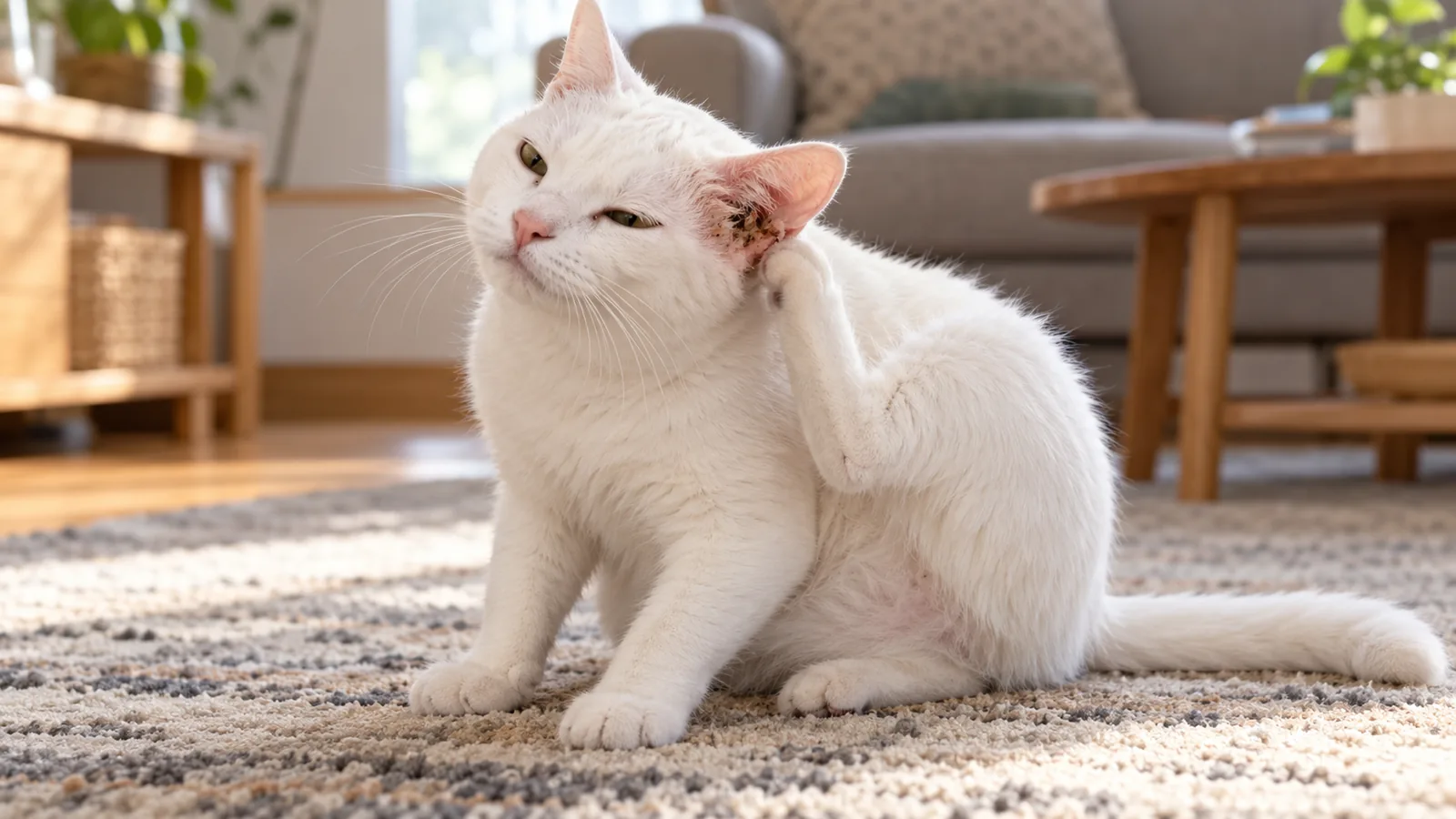
Spotting mites usually starts with the debris rather than the parasite itself: dark, crumbly discharge that looks like coffee grounds, paired with relentless scratching and head shaking. One ear or both can be involved, and the itch is intense enough that some pets break the skin behind the ear before anyone works out why.
The rest of the picture is easier to miss:
- Redness and swelling inside the canal: the skin looks inflamed and can feel warm to the touch.
- An unpleasant odor: mites alone smell faintly musty, so a strong smell usually means yeast or bacteria have moved in too.
- Crusty sores and thinning hair around the ears: damage from rubbing and digging, often worse on one side.
- Irritability when the ears are handled: a cat who always leaned into chin scratches now ducking your hand.
- A head tilt, or one ear carried low: this can mean the middle ear is involved, and it needs to be seen that day rather than watched over the weekend.
Dogs tend to show it more obviously, dragging their head along the couch or the carpet. Cats do more of their digging in private, and families often notice the hair thinning in front of the ear first.
What Happens If Ear Mites Go Untreated?
Ear mites aren't life-threatening, but a few weeks of scratching and head shaking change the ear itself.
- Secondary infection: scratched, inflamed canals are an easy target for bacteria and yeast.
- A thickened canal: repeated outer ear inflammation, known as otitis externa, can thicken the canal walls until air and medication no longer reach the problem.
- An aural hematoma: hard, frequent head shaking can rupture a blood vessel in the ear flap into a firm, fluid-filled swelling, which won't resolve on its own.
- Eardrum injury: long-standing or severe cases can damage the eardrum, which can affect hearing.
Ears that have been through several rounds of this need a look at what keeps setting them off, which is often an allergy. Caught in the first week or two, most cases need a single course of medication and a recheck.
How Are Ear Mites Diagnosed?
Diagnosis takes two steps: a look down the canal with an otoscope, then a sample of the debris read under the microscope in our in-house lab. Mites and their eggs are visible on the slide, so a few minutes settles whether you're dealing with parasites, yeast, bacteria, or more than one at once.
A complete exam looks past the visible canal, because middle and inner ear infection, known as otitis media and interna, brings head tilt, balance trouble, and facial nerve changes that need a different treatment plan than surface irritation. Some ears are too sore or too packed with debris to examine properly while a pet is awake, and in those cases we may recommend sedation so the canal can be seen and cleared in one visit.
What the scope and the slide show sorts the itch into one of these, and each one needs a different medication:
| Cause | Clues in the ear | What clears it |
| Ear mites | Dry, dark, crumbly debris, fierce itch, often both ears, common in young pets | A prescription antiparasitic, plus treating every pet in the home |
| Yeast (Malassezia) | Brown waxy discharge, sweet-sour odor, frequently tied to allergies | An antifungal medication |
| Bacterial infection | Yellow or green discharge, real pain, sometimes swelling | An antibiotic chosen on what the slide shows |
| Sarcoptic mange (Sarcoptes) | Fierce itching at the ear margins and elbows, and it can spread to people | A prescription antiparasitic for every pet in contact |
| Foxtail or grass seed | Sudden, severe, one-sided head shaking in a pet who was fine yesterday | Removal from the canal, often with sedation |
| Polyp or mass | Chronic one-sided discharge that returns after every treatment | Visualizing the canal, then sampling or removing the growth |
Foxtails are worth watching for here in Cupertino, where a dry grass seed can lodge in an ear canal during one off-leash afternoon, and that one needs a visit the same day rather than a week of drops. It’s entirely possible for a pet to have all of this at once: a foxtail, plus ear mites, plus a secondary bacterial and yeast infection all in one sore ear.
How Are Ear Mites Treated?
Treatment comes in two parts: clearing out the debris mites feed and hide in, then a prescription antiparasitic. Plan on at least three weeks, because the medication has to outlast eggs that hatch days after the first dose.
| Part of treatment | What it involves | Why it matters |
| Ear cleaning | Flushing wax and debris out of the canal | Medication can't reach the lining through a plug of debris |
| Prescription antiparasitic | A topical applied to the skin, or an oral medication | Kills what shelf products commonly leave behind |
| Treating the whole household | Every cat and dog, on the same schedule | One untreated pet reinfests the rest |
| Clearing secondary infection | An antibiotic or antifungal added based on the swab | Mite medication does nothing for yeast or bacteria |
| The recheck | A second swab once the course is finished | Confirms the mites are gone instead of assuming it |
Finish the full course even when the scratching stops after a few days, which it often does. We'll build treatment for ear disease around what the swab showed and what's realistic at home, since a cat who won't let anyone near their ears needs a different plan than a Labrador who takes medication like a snack.
What Can I Do at Home While My Pet Is Being Treated?
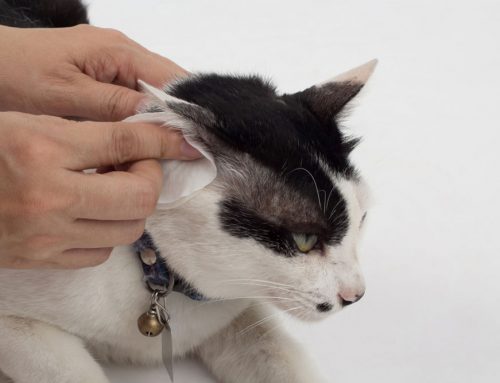
Home care has two jobs: keeping the ears clean enough for medication to reach the canal, and clearing mites out of the places your pet sleeps. Cleaning cats' ears at home works best with a vet-approved solution, cotton balls instead of swabs, and a gentle wipe at the opening of the canal rather than deep probing.
- Bedding: wash everything your pet sleeps on in hot water, including the blanket that lives on the couch.
- Floors and furniture: vacuum the carpets and cushions your pet uses, then empty the canister outside.
- Gear: wipe out carriers, wash soft toys, and clean brushes and combs between pets.
- Separation: keep your pet away from an animal who isn't on treatment, such as a visiting dog, until the course is done.
Never use a cotton swab inside the ear, since it packs debris against the eardrum and can injure it. Skip over-the-counter mite drops, because there are much better treatments available and using them without checking the ear drum first can cause permanent hearing damage. And leave oils, vinegar, and peroxide out of it entirely; they can burn an already inflamed canal.
Call us if the discharge changes color, the pain gets worse, or your pet starts tilting their head or stumbling.
How Do I Keep Ear Mites From Coming Back?
Keeping mites out is a two-part habit: consistent parasite prevention for every pet in the house, and a quick look in the ears between visits so a new itch gets caught in days rather than weeks.
Parasite Prevention Products That Cover Ear Mites
Many monthly flea, tick, and heartworm products also kill ear mites, and year-round parasite prevention matters in a mild Bay Area climate where fleas and ticks never fully die back. Some are applied to the skin, some are given by mouth, and the prescription versions cover more parasites than most over-the-counter products. Our doctors will match a product to your pet's species, age, and weight.
Checking Ears at Home Between Visits
A weekly look and a quick sniff catch ear trouble early. Cleaning dogs' ears means filling the canal with solution, massaging the base of the ear, and letting your dog shake the loosened debris out before you wipe.
An ear that's already sore, draining, or bleeding isn't a cleaning job at home, and the day of an appointment is the one day to skip cleaning, since the debris is the sample we need. Our veterinarians work on difficult ears often, and an ear that hasn't cleared with earlier treatment is worth a fresh look rather than another round of the same drops.
Questions We Hear About Ear Mites and Itching
Can people catch ear mites from a cat or dog?
The mites that live in pets' ears are adapted to cats and dogs, and transmission to people is very rare. A few people develop a temporary itchy rash from close contact with an infested pet, and it clears once the animals are treated. The spread that matters is pet to pet.
Why is my pet still scratching after treatment?
Some itch in the first week is expected, because inflammation takes a while to settle even after the parasites are dead. Past that, the usual explanations are a secondary yeast or bacterial infection that needs its own medication, a housemate who never got treated, a course that was stopped early when things looked better, or an allergy that was there all along and is now the main driver. A recheck swab tells us which one it is.
Do over-the-counter ear mite drops work?
Some kill adult mites, but most don't handle the eggs, which is how a treated ear is itchy again two weeks later. If the debris is yeast rather than parasites, a mite product does nothing while the infection gets a head start, and in an ear with a damaged eardrum some ingredients can cause harm. A swab first, then the right medication, is faster.
Getting Relief for Your Pet's Itchy Ears
Most pets are more comfortable within days of starting the right medication. If the scratching and head shaking haven't let up, schedule a visit at Cupertino Animal Hospital and we'll look at a swab before anyone starts treating. Ongoing ear care for pets with a history of trouble is a large part of what we do.