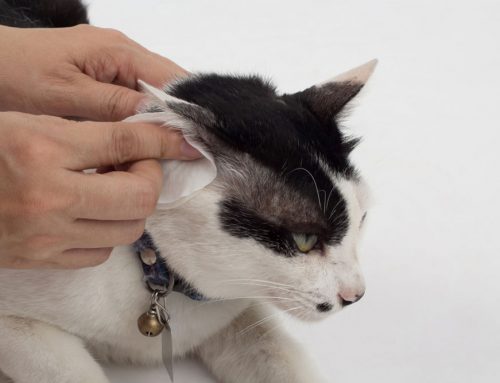
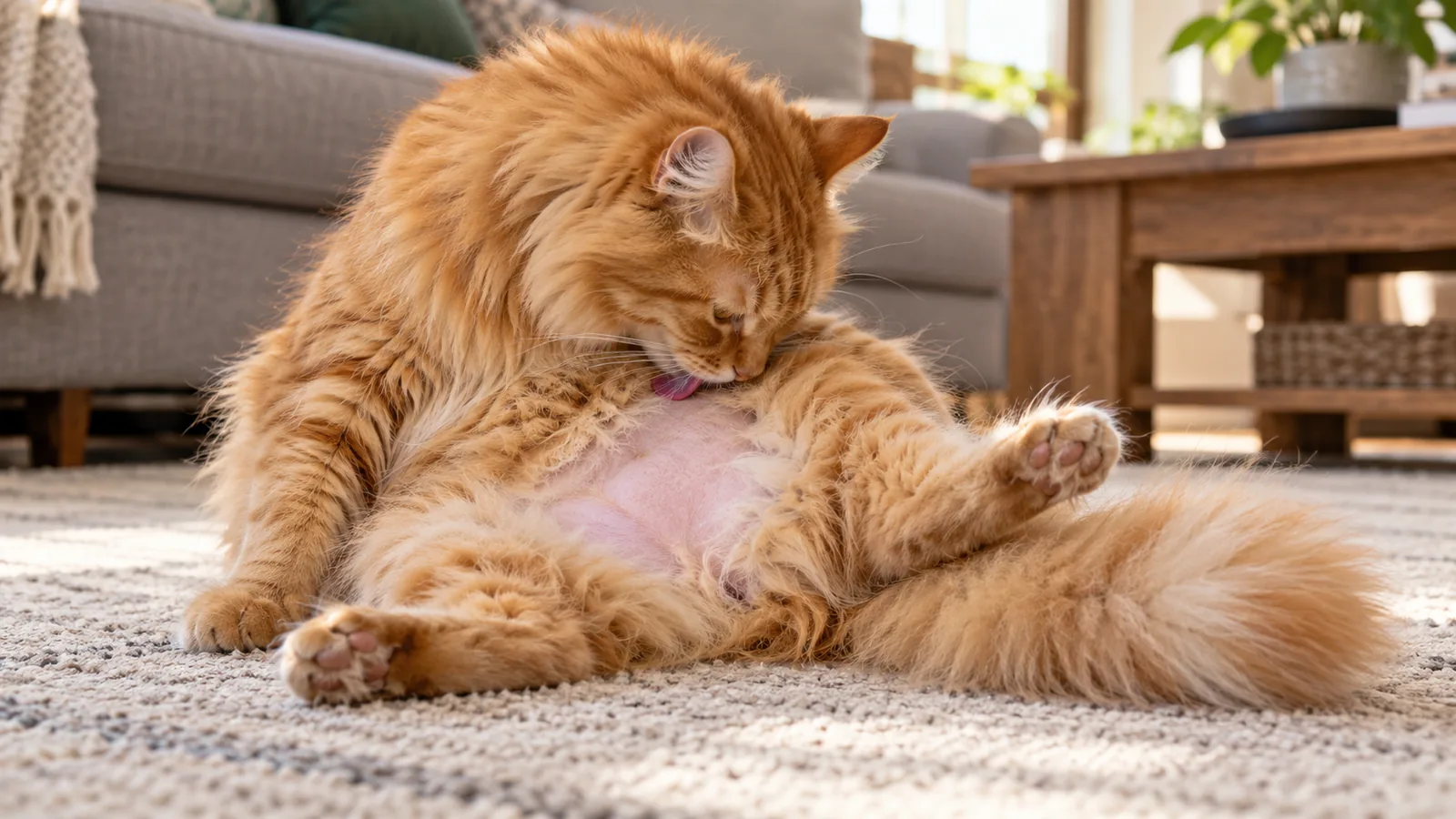
Hormonal hair loss thins a dog's coat evenly on both sides, usually over the flanks, belly, and tail, with little or no scratching, while allergies and mites leave itchy, inflamed, patchy skin. Hypothyroidism, Cushing's disease, and sex hormone trouble in intact dogs work slowly, thinning a coat over months rather than weeks, so the change often gets written off as aging. Cats are trickier, since a bare belly and flanks are more often licked bald during grooming that happens out of sight, which is why we check the hairs under a microscope before blaming hormones. A cat whose coat looks unkempt or greasy alongside weight loss, a big appetite, or restlessness points toward hyperthyroidism, which is not something to sit on.
The bare patch over one flank leaves an open question, especially when nobody in the house has caught your pet scratching. At Cupertino Animal Hospital we work these cases from the inside out, starting with thyroid, adrenal, and sex hormone testing and a check for parasites or secondary infections. When a gland or an abdomen needs a direct look, we have ultrasound and advanced imaging on site. Skin and coat changes turn up at every wellness exam we do, and if the thinning has already started, book a visit so we can find out what is driving it.
What a Thinning Coat Is Telling You
- Itchy, patchy, inflamed skin points toward allergies, mites, fleas, or infection. Even thinning with calm skin underneath points toward hormones.
- Cats often lick hair off in private, so a bare belly can look like skin disease when the driver is pain, stress, or hyperthyroidism.
- The pattern also decides the testing: skin scrapings read under the microscope for inflamed skin, hormone panels for a quiet, even thinning.
- Many pets regrow their coat once the cause is treated, over weeks to several months.
How Do I Tell Normal Shedding From Real Hair Loss?
Normal shedding leaves hair on the brush while the coat stays even and the skin stays covered. Real hair loss leaves skin you can see: a thin patch, a bald stripe, or hair that never fills back in.
Alopecia is the medical word for hair loss, and it's a symptom rather than a diagnosis. The same bald patch on two different pets can call for two unrelated treatments.
Cats don't always leave evidence. Hair licked and chewed off at the surface, called barbering, leaves stubble instead of bare skin, which is easy to mistake for a coat that stopped growing.
| Sign | Normal shedding | Hair loss worth a visit |
| Coat | Thins evenly, skin stays covered | Skin shows through, or distinct bald areas |
| Timing | Spring and fall, or steadily in some breeds | Any season, and it doesn't fill in |
| Skin | Looks and feels normal | Red, scaly, greasy, darkened, or crusted |
| Behavior | The occasional scratch | Focused licking, chewing, or scratching in one spot |
| Regrowth | Fills in within a few weeks | Stays bare or keeps spreading |
Photos help. Take one every few weeks from the same angle and light, and bring them to your next wellness visit so we can compare rather than guess.
What Hormone Problems Thin a Pet's Coat?
Most hormonal hair loss traces back to a short list: an underactive thyroid in dogs, too much cortisol from the adrenal glands, an overactive thyroid in cats, and sex hormone imbalances in intact pets. All of them work slowly, none causes much itching, and the blood often shows the problem before the coat does.
Hypothyroidism, Cushing's Disease, and the Feline Thyroid
Hypothyroidism in dogs thins the coat along both flanks and the tail while the skin underneath stays calm, usually alongside weight gain, low energy, and a dog who seeks out warm spots.
Cushing's disease comes from too much cortisol: a pot-bellied silhouette, thin skin that bruises easily, a bottomless appetite, heavy drinking and urinating, and hair loss across the trunk that leaves the head and legs alone.
Hyperthyroidism in cats runs the other direction, leaving the coat dull, patchy, or greasy while your cat eats more and weighs less, and it responds well to treatment once a blood test confirms it.
Could Sex Hormones or Someone's Hormone Gel Be the Cause?
Sex hormones can thin a coat in three ways, and each has its own fix once we know which one is at work.
- Intact males: A testicular tumor can pump out estrogen, thinning the coat evenly over both flanks and the groin. Neutering removes the source, and the hair usually returns over a few months.
- Intact females: Matching flank thinning that waxes and wanes with heat cycles, or sits alongside an ovarian cyst, generally settles after a spay.
- Hormone products at home: Estrogen and testosterone gels and creams used by people absorb into the dog who sleeps against that arm or the cat who licks the application site. If anyone in your household uses one, tell us.
Do Allergies Cause Dogs and Cats to Lose Hair?
Allergies are among the most common reasons a coat thins, though the bald patches come from the scratching, licking, and chewing rather than the allergy itself. Atopic dermatitis is an immune overreaction to environmental triggers like pollen, dust mites, and mold.
True food allergies are reactions to a specific protein a pet has eaten for months or years, and they itch year-round around the face, ears, paws, and rear. Flea saliva is the third big trigger, and a single bite can set off days of intense itching in a sensitized pet. Cupertino winters stay mild enough that fleas never die back, so flea allergy stays on the list all twelve months.
Allergic dogs chew their paws, rub their faces along the carpet, and thin over the rump and flanks. Allergic cats are quieter: tiny crusts along the back and neck, or hair broken off short over the belly and inner legs.
Long-term control combines medicated baths, omega-3 support, an anti-itch medication, and sometimes an elimination diet or allergy testing, which is worth doing when the itch keeps returning.
What Parasites and Skin Infections Make Hair Fall Out?
Indoor pets pick up parasites too, and the mites behind the worst of the hair loss are microscopic, so you won't spot them at home. Once the skin is inflamed, the bacteria and yeast that normally live on its surface have room to overgrow.
Demodex mites live in the hair follicles of healthy dogs in small numbers and cause patchy hair loss only when they outpace what the immune system can control, most often in puppies and pets with another illness taxing their defenses. Sarcoptic mange, the cause of scabies, burrows into the skin surface instead: intensely itchy, contagious between dogs, and worst along ear margins, elbows, and belly. Fleas take hair off the lower back and tail base through the chewing rather than the bites, so year-round prevention takes them off the list, and the Staph infections that follow inflamed skin raise small round crusts that leave a bald ring as they heal. Malassezia yeast adds a greasy feel, a musty smell, and darkened skin in the armpits and groin, while ringworm, a fungus rather than a worm, leaves circular bald spots with scaly edges, turns up often in kittens, and passes to people and other animals in the house.
Is My Dog's Breed Behind the Thinning Coat?
A handful of breeds inherit coat conditions that treatment can manage but not cure. Some inherited hair loss traces back to follicles built differently from birth, so the goal shifts from regrowth to keeping the skin comfortable and infection-free.
- Color dilution alopecia shows up in blue and fawn coats, including blue Dobermans, silver Labradors, and blue Staffordshires, whose hair snaps off over the back and flanks as they reach young adulthood.
- Boxers, Bulldogs, and Airedales are the usual breeds for seasonal flank alopecia: matching bare patches on both sides that come and go on a yearly cycle and often regrow without treatment.
- Pomeranians, Chow Chows, and other plush-coated breeds can develop alopecia X, shedding the outer coat and keeping only a woolly undercoat.
Two more show up as crust and scale as much as bald skin.
- Sebaceous adenitis in Standard Poodles and Akitas builds heavy scale and tight casts of hair along the back.
- Zinc-responsive dermatosis leaves Huskies and Malamutes crusted over the muzzle, around the eyes, and on the footpads, and many improve with zinc supplementation.
None of these get diagnosed first: mites, infection, allergy, and hormones come off the list before a breed condition goes on it, and a skin biopsy is sometimes needed to confirm one. Management leans on supportive skin care, nutrition, and for a few of these, melatonin.
Why Would a Pet Lick or Chew Their Own Hair Off?
Many pets lick and chew at themselves to cope with stress or pain, and cats tend to do it where nobody is watching. Psychogenic alopecia, hair loss from stress-driven overgrooming, leaves smooth, thinned stripes along the belly and inner thighs with healthy skin underneath, and that diagnosis only holds once medical causes are ruled out.
What counts as stress to a cat is rarely dramatic: a new baby, a move, construction next door, or a litter box moved to a busy room can all do it. Dogs run the same pattern, licking one spot on a wrist or hock until the hair is gone and the skin thickens into a firm, raised sore.
Pain is the other driver, and the one families miss. Pets lick, chew, and pull hair over a sore joint, an inflamed bladder, or a full anal gland even when the skin there looks fine. A bald patch over one hip on a nine-year-old Labrador is an arthritis question first and a behavior question second.
Do Diet and Bathing Habits Affect My Pet's Coat?
Skin and coat are among the first places a nutritional shortfall shows, since growing hair takes protein, fatty acids, zinc, and biotin. Bathing too often, or with a harsh shampoo, strips the oils that keep each hair flexible.
Fish oil strengthens the skin's barrier and quiets inflammation, though the dose that helps a 10-pound cat looks nothing like what a 70-pound dog needs. Balanced commercial diets cover the basics, so the pets most likely to benefit are the ones eating an unbalanced homemade diet, recovering from illness, or losing nutrients through the gut, and we'll look at what's in the bowl before anyone adds a supplement.
Regular brushing lifts out dead hair, spreads natural oils down each hair shaft, and gives you a weekly look at the skin. Brush more and bathe less, and when a bath is due, use a pet shampoo and rinse longer than feels necessary, since leftover shampoo is itchy on its own.
What Happens at a Hair Loss Appointment?
A hair loss visit starts with your history: when the thinning began, whether anyone has seen scratching, what's changed at home, and which products your pet is already on. From there the exam and a handful of simple samples usually separate parasites, infection, and hormonal disease.
- Pattern mapping: We note where the hair is missing and whether the skin under it is calm or inflamed, which narrows the list before any test runs.
- Scrapings and hair plucks: These find mites and tell us whether a hair fell out at the root or was chewed off mid-shaft, which answers the barbering question for cats.
- Cytology: Reading skin cells under a microscope takes minutes and shows whether bacteria or yeast have overgrown, which decides whether an antibiotic or an antifungal belongs in the plan.
- Fungal culture: When circular patches raise the ringworm question, a culture settles it, though the fungus needs days to weeks to grow.
- Blood work and endocrine panels: When the pattern points at hormones, we start with bloodwork, add a thyroid or adrenal panel, and use ultrasound on the adrenal glands if those numbers call for it.
- Allergy evaluation: A strict elimination diet or allergy testing comes in once parasites and infection are off the table, since either one muddies the result.
Skin samples are read under the microscope here, and treatment often starts the same day.
How Is Hair Loss in Dogs and Cats Treated?
Treatment follows the cause rather than the bald patch. Fleas, mites, and infections are treated and gone within weeks, hormonal disease needs ongoing medication and monitoring, stress and pain driven grooming settles once the underlying source is addressed, and inherited coat conditions are managed rather than cured.
| What we find | What treatment usually involves |
| Fleas or mites | Prescription parasite control for every pet in the home, plus environmental treatment for fleas |
| Bacterial or yeast infection | Medicated shampoo or mousse, with oral antibiotics or antifungals for deeper infection |
| Ringworm | Topical and oral antifungals, repeat cultures to confirm clearance, home cleaning routine |
| Environmental or food allergy | Itch control, skin barrier support, elimination diet or allergy testing, long-term plan |
| Hypothyroidism or Cushing's | Daily medication with periodic blood work to keep the dose right |
| Feline hyperthyroidism | Medication, prescription diet, or definitive treatment, decided case by case |
| Hormones in an intact pet | Spay or neuter, with coat regrowth over the following months |
| Stress or pain driven grooming | Treating the painful source, enriching the environment, sometimes anti-anxiety medication |
| Breed-related conditions | Supportive skin care, nutrition, protection from sun and cold |
Our doctors build the plan with you around the test results and what's realistic in your home. Rechecks matter, since hair regrows slowly and a visit a few weeks in tells us whether the dose is right and whether a second infection has moved in.
Questions We’re Asked About Pet Hair Loss
How long until my pet's coat fills back in?
Many pets regrow a full coat, and how long it takes depends on the cause. Flea allergy and bacterial infection often fill in within a month or two of being cleared. Hormonal cases move slower, since the follicle has to restart, and several months of treatment before the flanks look normal is typical. Scarred skin and inherited conditions may never fully regrow.
Is any of this contagious to me or to my other pets?
A few causes are contagious and most are not. Ringworm passes readily to people and other animals, and sarcoptic mange can leave a person with an itchy rash for a week or two. Demodex, allergic skin disease, and hormonal hair loss aren't contagious. If anyone in the house has a new itchy rash while your pet is losing hair, mention it at the visit, since it narrows the list.
Should I try an over-the-counter shampoo or supplement first?
Brushing and a gentle pet shampoo won't hurt most pets, but a few home moves make things worse. Never give human pain medication, including ibuprofen and acetaminophen, which are toxic to pets. Skip combination antihistamines too, since the added decongestant is dangerous for dogs and cats. Over-the-counter mite dips and sulfur preparations can badly irritate inflamed skin, and prescription parasite control from our online pharmacy treats mites and fleas that those products won't. Don't shave a patch for a better look either, since clipped hair is slow to return in plush-coated breeds.
Sorting Out Your Pet's Hair Loss Together
A thinning coat comes on slowly enough that it's easy to second-guess what you're seeing. At Cupertino Animal Hospital we'll tell you plainly what the testing found and what it means for your dog or cat.
If the thinning is spreading or your pet can't leave the spot alone, schedule an appointment and bring those photos from your phone.